Showing posts with label Ganga. Show all posts

Tuesday, June 2, 2015

The sacred and the profane- The Hindu

In the sacred city of Varanasi, where pilgrims come in search of redemption for their loved ones, offering their ashes to the river after they die, devotees struggle to admit that the river they worship as their mother is polluted indeed. “Ye pavitra Ganga maiyya hai. Iske jal se aatma ko mukti milti hai” (She is the holy Mother Ganga. Her waters bring you salvation) is the steady line uttered by believers who come here for a ‘divine’ dip.


A strange dichotomy exists between their respect for the river and their willingness to pollute it all the same. During an early morning boat ride on the Ganga, I came across people lathering themselves with soap for a ritual bath right where half-burnt carcasses could be seen floating! Two ghats — Manikarnika and Harishchandra — are into the business of burning and disposing off bodies round-the-clock. Hindu religious beliefs and rituals surrounding death and other ceremonies are central to the legitimisation of practices that encourage such pollution. At Harishchandra Ghat, which receives up to 200 bodies every day for cremation, an electrical crematorium set up by the local municipal body lies mostly unused. A helper at the crematorium from the Dom community, which traditionally tends to the pyres, says that people prefer using the electrical service only during the rain when the wood used for burning the dead gets damp.
There was a point in time when people justified disposing the dead into the river saying it served as food for the aquatic animals in it. In Varanasi, turtles were bred and released into the river to help break down the wastes.
However, B.D. Tripathy, head of the Centre for Environmental Sciences and Technology at the Benares Hindu University, says that this has not served the purpose, with the river’s self-purifying capacity dwindling over the years. Construction of big dams for hydroelectric projects, diversion of river water to supply water to various cities, including Delhi, water-intensive irrigation practices for agriculture by the river banks, and encroachments on the banks in cities like Patna and Allahabad have all constricted the free flow of the river, vital for flushing all the waste dumped into it.
In order to break down all the organic waste dumped into the river, the water needs high levels of oxygen. But the release of raw untreated sewage into the river has further reduced its capacity for self-purification, Tripathy says.
Various studies have shown that the river’s capacity to break down organic matter, measured by Biochemical Oxygen Demand (BOD) has reduced considerably. While in a water body fit for bathing BOD must not exceed 3 mg/litre of water; in the nine major religious bathing ghats of Varanasi, BOD ranges from 4.8 mg to 62 mg/lt.
Given these concerns, the central government is now contemplating a strict law to penalise those throwing any form of waste into the river. Mohale says ‘Jal Police’ and CCTV cameras would be placed on the ghats to monitor polluting practices, and heavy fines would be imposed on violators, including those who use soap for bathing. But for a holy city that thrives on the prospect of sending the deceased to heaven, will penalising the polluters for such practices be feasible? That is the question.

Saturday, November 8, 2014

Heavy metals in Ganga contaminate food chain: Times of India (8th November 2014)

Click here for link
Varanasi: Prime Minister Narendra Modi might be startled to know that despite his clarion call to restore the pristine glory of the Ganga, the river in Kashi is not only polluted with municipal wastewater but also with toxic heavy metals that have started contaminating the food chain. The PM is arriving here on a two-day visit on Friday.

Banaras Hindu University's environment scientists have detected presence of toxic heavy metals in Ganga's water and deposition in river sediments. Besides, metal bio-accumulation has been found in fish too. In fact, the study indicates that highest accumulation of metals was found in fish muscle followed by gills. The least accumulation was found in liver. This poses a grave threat as fish muscle is the principal source of metal exposure to human as Mangur (the fish used in the study) is an integral part of non-vegetarian diet of population living in the Ganga basin.

Varsity's environment scientist and expert member of the National Ganga River Basin Authority (NGRBA) Prof BD Tripathi said, "No guidelines have been provided regarding the concentration of heavy metals in the river sediments in India. Such a guideline is urgently required." Incidentally, Prof Tripathi undertook a study to assess concentration of heavy metals in Ganga's water and river sediments.

Prof Tripathi said that the study found the river water laced with toxic heavy metals, including Manganese, Iron, Nickel, Copper, Zink, Cadmium, Lead, Titanium and Vanadium. For the study, samples of river water and sediments were collected from 15 sampling points located near the Samne Ghat, Ravidash Ghat, Assi Ghat, Ganga Mahal Ghat, Chetsingh Ghat, Harishchandra Ghat, Shivala Ghat, RP Ghat, Manikarnika Ghat, Bhosle Ghat, Panchaganga Ghat, Teliyanala Ghat, Rajghat I, Rajghat II, and Ganga-Varuna confluence,

"Though the concentration of these metals, except lead, was found to be within the permissible limit, the process of biological magnification could increase the concentration of these chemicals manifold due to their persistent nature," he said adding that deposition of these metals was harmful to the health of the river and the humans.

He pointed the sewer systems of Varanasi as the major source of discharging toxic industrial waste in Ganga. "Concentration of these metals is also found in river sediments," he claimed and added that anthropogenic factors (discharge from agriculture, domestic and industrial sectors) were the prime cause of river pollution. Industrial effluents directly get mixed into city sewage and were ultimately discharged into the river due to unavailability of metal removing technologies, he added.

Tuesday, September 2, 2014

Existence of Ganga in danger, says environment scientist Prof B D Tripathi

New Delhi: Existence of Ganga in danger, says environment scientist Prof B D Tripathi
New Delhi, June 8 2014: The existence of Ganga is in danger and the pollution of the river is a secondary issue, a renowned environment scientist has said and urged the NDA government to launch a “Save Ganga” programme.
B D Tripathi, an expert member of National Ganga River Basin Authority (NGRBA), also requested the Narendra Modi government to make active the Prime Minister-chaired body saying it was virtually non-existent during the UPA rule. “My observation on the basis of my research for the past four decades is that the problem of pollution is secondary and the main problem now is the existence of Ganga. It is in danger,” Tripathi told PTI.
“The mission should be called Save Ganga not Clean Ganga,” he said.
According to him, Ganga is facing a problem of what he termed as ‘triple three’. “They are reduced water flow, reduced water carrying capacity and reduced water quality that is pollution,” he said.
Blaming the “indifferent attitude” of the previous government for the failure of the Ganga Action Plan, Tripathi said that considering the Modi government’s seriousness on Mission Ganga, NGRBA should be made functional now.
“Being an expert member of NGRBA, I have raised this issue several times but the previous government had an indifferent attitude towards this cause that resulted in failure of various projects so far.
“There have been only three meetings of NGRBA in the past four years. Now since Narendra Modi himself has mission Clean Ganga on his priority list, so it is high time to make NGRBA functional,” he said.
Tripathi, also a coordinator for Centre for Environmental Science and Technology at the Banaras Hindu University, has been associated with the cause since 1972. The Centre has given Ganga the status of national river and constituted NGRBA in February 2009. The objective of the authority is to ensure effective abatement of pollution and conservation of Ganga by adopting a river basin approach for comprehensive planning and management.
“Government has declared Ganga as a national river but till now there is no policy or planning made in this regard. Ganga flows through five states (Uttarakhand, Uttar Pradesh, Jharkhand, Bihar and West Bengal) and they exploit it in their way,” Tripathi said.
“Centre gives 85 per cent of funds and rest 15 per cent is contributed by states but there has been no monitoring at any level. After five years, you come to know about the failure of the plan but who is accountable for that,” he asked.
He maintained that the Centre should see the problem in its entirety. “Almost Rs 1500 crore were spent on GAP 1 and projects amounting to Rs 20,000 crore are still running. Government must fix accountability and there should be monitoring after every three months. Monitoring committee should consist of technical experts,” he said.
Suggesting long term measures to address these problems, he said that there should be a complete
ban on construction of big dams at the source of its streams and usage of alternative power generating methods is must.
“Eight streams of Ganga originate from Gangotri glacier but the main ones are Bhagirathi, Mandakini and Alaknanda. All the proposed dams near the source should be cancelled. They can construct small dams,” he said.
According to Tripathi, the whole Uttarakhand region is low pressure zone where the wind velocity is very high so electricity can be generated through windmills like Europe. “As far as the reduction of ground water level is concerned, rainwater harvesting should be implemented strictly,” he suggested.


Wednesday, May 28, 2014

Suggestions to solve the problem of mother Ganga

Congratulations to Shri Narendra Modi ji for holding the chair of Hon'ble Prime Minister of India and creating separate ministerial arrangement to solve the problem of mother Ganga. However, before execution of any new program on Ganga following may be important to keep in the mind.
Continuous decrease in the flow of water during past a few years has induced fragmentation of the National River Ganga and it has imposed a serious problem to the nation and threatened the lives of 450 million people
Decrease in the velocity and quantity of Ganga water has adversely affected its dilution factor rather self purifying capacity. Hence, without any further addition in the quantity of pollutants, the intensity of Ganga water pollution has been increased
Decrease in the flow of Ganga water is the probable reason by which all efforts made by the government during past a few decades to control the pollution of river Ganga has not been visualized
Mother Ganga is suffering with the “triple R” problem i.e. Reduced ecological flow, Reduced water carrying capacity and Reduced quality i.e. Pollution of water
The problem of mother Ganga is a multi-ecosystem problem. Henceforth, only holistic approach can save the Ganga.
Aforsaid problems may be solved as:
Ganga has been declared as the National river in 2008; however, till date it is under the control of 5 states i.e. Uttarakhand, Uttar Pradesh, Bihar, Jharkhand and West Bengal. Each state has its own regulations for the consumption and management of the river water. Henceforth, central government is not able to implement required projects for the conservation.


1.  A new regulation act is required to put the Ganga under the control of Central government.

2.  Present technologies used for the generation of hydropower in Uttarakhand is distructive at the ecosystem level and non eco-friendly.
Uttarakhand is under low pressure zone having high wind velocity. Henceforth,Wind power mills may be an option for the power generation.


3. Construction of big dams on main head streams of the Ganga is reducing the flow of Ganga water and changing its natural quality. Henceforth, a number of small dams may be constructed on the side streams and used for hydropower generation. Construction of small dams on side streams shall be eco-friendly.


4. Extraction and diversion of huge quantity of Ganga water should be minimized with the instructions to the consumers to become self sustainable. So that, in future complete ban be created on the huge extraction of water


5. Encroachment of the Ganga land on its both sides has reduced the water carrying capacity of river Ganga henceforth, encroachment of land on both the bank side be banned immediately.


6. Existing sewage treatment plants are not appropriate henceforth, all should be renovated as per requirement.


7. Imported technologies for the pollution control or wastewater treatment must be tested under Indian condition.


8. Consumers of the Ganga water be associated with different projects of the Ganga.


9. Appropriate policy be framed for the establishment of treatment plants, extraction of Ganga water and discharge of wastewater.


10. Rainwater harvesting and groundwater recharging technologies be adopted immediately in different zones of the Ganga basin.


11. In order to implement the projects effectively an efficient monitoring committee consisting experts from different fields be constituted for regular trimonthly monitoring.


12. Gomukh to Bay of Bengal (2525 Km) Ganga consists of three different ecosystems with specific characters. Henceforth, detailed investigations on different eco-system components may provide better tool to conserve the Ganga.

Tuesday, May 29, 2012

Scientific Ganga Yatra

Near Hydro-power Project
Near Tehri Dam
A closer View of Tehri Dam
At Karn Prayag
View of Karn Prayag
Near KedarNath
Dry stretch of River Bhagirathi
Beautiful location of Yamunotri
River Mandakini: Peace of mind
Site View of river Alaknanda
Receding water table at Tehri Dam
Ganga at Rishikesh
Ganga at Gangotri

Monday, May 21, 2012

Special Report on Scientific Ganga Yatra in Uttarakhand


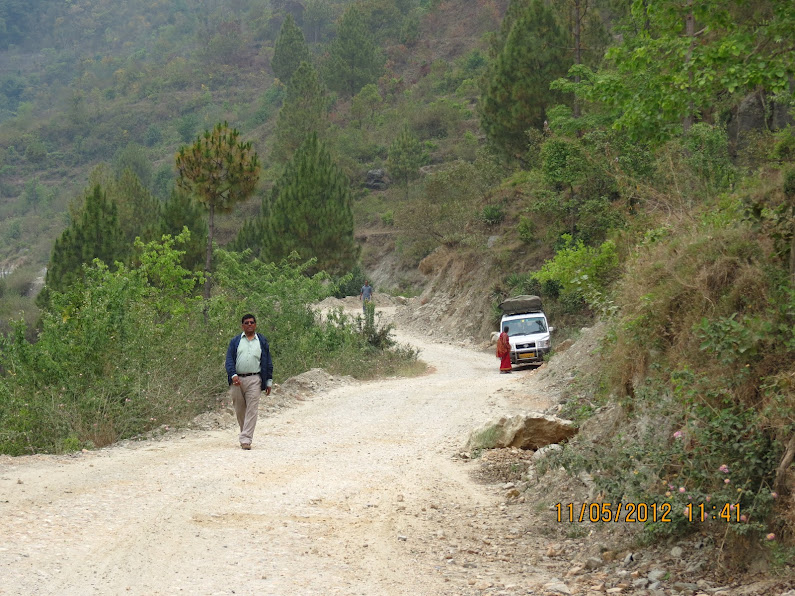
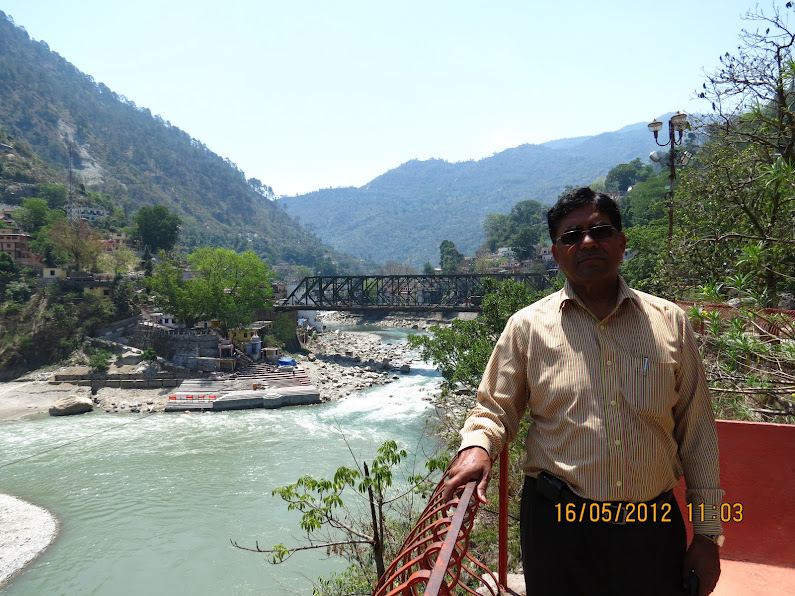
In view of the dedicated efforts of Hon’ble Prime Minister of India to Save Mother Ganga and related Social Movements, Prof. B. D. Tripathi of the Banaras Hindu University, who has pioneered Ganga Pollution Researches since 1972 and also Expert Member of the National Ganga River Basin Authority (NGRBA), has made an intensive GANGA YATRA in Uttarakhand and field based Ecological Study during the month of May 2012. He has visited river Ganga, Bhagirathi, Alaknanda, Mandakini, Pindar, Dhauli Ganga, Nandakani, Sone Ganga and river Yamuna in Uttarkhand. Prof. Tripathi has travelled across the Uttarakhand and spent day and night on the bank of various rivers for seventeen days. Dr. Tripathi has also visited Gangotri, Yamunotri, Badrinath, Kedar Nath, Deoprayag, Rudraprayag, Karnprayag, Nandprayag,Vishnuprayag,  Soneprayag, different Dams and Hydroelectric Projects etc. to study different anthropogenic activities and its impact on GANGA. The main aim of his study was to identify anthropogenically induced ecological problems of river GANGA in Uttarakhand, and suggest possible remedial measures to Hon’ble Prime Minister to overcome the problems of river GANGA and its important head streams, who are regarded as lifeline and worshiped as the mother in India. During Scientific Ganga Yatra, besides ecological investigation, Prof Tripathi has also met to the people who are dependent for their livelihood on these rivers, religious leaders, social activists, various scientific groups working on Ganga, noted environmentalists and those who were serious about the development of the Uttarakhand . He has made following important observations during his scientific Ganga Yatr
  1. Large number of hydroelectric power projects have been commissioned and proposed on river Ganga and Alaknanda, such as on river Ganga 16 hydroelectric projects have been commissioned, 13 projects are under construction and 54 projects are proposed. On river Alaknanda 6 hydroelectric projects have been commissioned, 8 projects are under construction and 24 projects are proposed.  
  2. Hydroelectric power projects are causing submersion of large land area which results in loss of flora and fauna. These hydro-power projects are altering natural rhythm of nature, sediment and nutrient regimes, temperature, chemical qualities of water, fresh water biodiversity and reproductive capabilities of aquatic animals. This also creates high hydraulic pressure at a given point of earth which may stimulate earth quake and landslides
  3. Construction of dams causes huge destruction of mountain ecosystem including reduction in the natural flow and dilution capacity of the river resulting enhancement of the pollution level
  4. The Tehari Dam has been constructed among the hills made up by the soil. This result in loss of 25-30% water of the reservoir through seepage and induce severe threat to the hills in the vicinity.
  5. In Uttarakhand, natural flow of majority of rivers has been obstructed by a series of hydroelectric power projects. At many places main path of these rivers have been diverted through the tunnels and upto several km main path of the river has been dried. This has not only destroyed the flora and fauna of the river stretch but badly affected the quality of water, human life and altered the structure and functions of the natural ecosystem. 
  6. The diversion of rivers has also created various socio-economic and religious problems to the local inhabitants. Their local resource based livelihood (such as agriculture, domestication of animals and religious activities) suffers significantly enhancing unemployment and poverty.
  7. The blasting activities in these hilly areas are causing huge cracks in the hills, loss of biodiversity, seepage of water and increased soil erosion responsible for siltation in the rivers.
  8. The observed high wind speed in the Uttarakhand due to low pressure belt creates suitable environment for the production of electricity through wind mills. The use of Wind mills may mitigate the negative impacts of the anthropogenic activities in these areas.
  9. Promotion of Wind mills for generation of electricity in Uttarakhand in place of hydropower projects which require huge land area and water, shall help in maintenance of the ecological flow of the river Ganga which is currently a burning issue in India and main objective of the NGRBA.

Monday, December 5, 2011

India Stems Tide of Pollution into Ganges River

The Ganga is unmistakably holy, made so by thousands of years of religious practice, however, recently threatened with heavy pollution load.

Past rescue efforts of Ganga Water Pollution Control have failed due to fatal gaps in planning, implementation, and administration, said Prof. B. D. Tripathi, of the Centre for Environmental Science and Technology, Banaras Hindu University.

A new cleanup plan for the entire 416,000 - square mile (1 million square kilometer) Ganges River Basin is gathering steam, but it will take decades and cost tens of billions of dollars.

National Geographic Daily News: http://news.nationalgeographic.com/news/2011/11/111123.