भारत में गांवों के सर्वांगीण
विकास हेतु प्रधानमंत्री श्री नरेन्द्र मोदी द्वारा सांसदों के एक-एक गाँव को
गोद लेने की "आदर्श ग्राम योजना" अत्यंत प्रसंशनीय है. इसी तर्ज पर "नमामि
गंगे" की महत्वाकांक्षी योजना की सफलता हेतु गंगा क्षेत्र के सभी सांसदों द्वारा अपने-अपने संसदीय क्षेत्र में
"गंगा परिक्षेत्र" को गोद लिया जाना चाहिये. सांसदों द्वारा अपने-अपने
क्षेत्र में "गंगा परिक्षेत्र" को गोद लेकर नमामि गंगे योजना के अंतर्गत
चलाई जाने वाली सभी परियोजनाओं का संचालन उनकी देख-रेख सुनिश्चित किया जाये. ऐसा
होने पर ही गंगा से जुड़ी सभी परियोजनाओं की आशातीत सफलता की उम्मीद की जा सकती है.
गंगा संरक्षण से जुड़े अपने पिछले 40 वर्षों के अनुभव पर
हमारा मानना है कि प्रधानमंत्री द्वारा लिया गया यह निर्णय सभी परियोजनाओं के
क्रियान्वयन हेतु केंद्र एवं राज्य सरकारों के बीच समन्वयन का भी कार्य करेगा.
Showing posts with label NGRBA. Show all posts
Showing posts with label NGRBA. Show all posts
Monday, December 1, 2014


Wednesday, May 28, 2014
Suggestions to solve the problem of mother Ganga
Congratulations to Shri Narendra Modi ji for holding the chair of Hon'ble Prime Minister of India and creating separate ministerial arrangement to solve the problem of mother Ganga. However, before execution of any new program on Ganga following may be important to keep in the mind.
Continuous decrease in the flow of water during past a few years has induced fragmentation of the National River Ganga and it has imposed a serious problem to the nation and threatened the lives of 450 million people
Decrease in the velocity and quantity of Ganga water has adversely affected its dilution factor rather self purifying capacity. Hence, without any further addition in the quantity of pollutants, the intensity of Ganga water pollution has been increased
Decrease in the flow of Ganga water is the probable reason by which all efforts made by the government during past a few decades to control the pollution of river Ganga has not been visualized
Mother Ganga is suffering with the “triple R” problem i.e. Reduced ecological flow, Reduced water carrying capacity and Reduced quality i.e. Pollution of water
The problem of mother Ganga is a multi-ecosystem problem. Henceforth, only holistic approach can save the Ganga.
Aforsaid problems may be solved as:
Ganga has been declared as the National river in 2008; however, till date it is under the control of 5 states i.e. Uttarakhand, Uttar Pradesh, Bihar, Jharkhand and West Bengal. Each state has its own regulations for the consumption and management of the river water. Henceforth, central government is not able to implement required projects for the conservation.
1. A new regulation act is required to put the Ganga under the control of Central government.
2. Present technologies used for the generation of hydropower in Uttarakhand is distructive at the ecosystem level and non eco-friendly.
Uttarakhand is under low pressure zone having high wind velocity. Henceforth,Wind power mills may be an option for the power generation.
3. Construction of big dams on main head streams of the Ganga is reducing the flow of Ganga water and changing its natural quality. Henceforth, a number of small dams may be constructed on the side streams and used for hydropower generation. Construction of small dams on side streams shall be eco-friendly.
4. Extraction and diversion of huge quantity of Ganga water should be minimized with the instructions to the consumers to become self sustainable. So that, in future complete ban be created on the huge extraction of water
5. Encroachment of the Ganga land on its both sides has reduced the water carrying capacity of river Ganga henceforth, encroachment of land on both the bank side be banned immediately.
6. Existing sewage treatment plants are not appropriate henceforth, all should be renovated as per requirement.
7. Imported technologies for the pollution control or wastewater treatment must be tested under Indian condition.
8. Consumers of the Ganga water be associated with different projects of the Ganga.
9. Appropriate policy be framed for the establishment of treatment plants, extraction of Ganga water and discharge of wastewater.
10. Rainwater harvesting and groundwater recharging technologies be adopted immediately in different zones of the Ganga basin.
11. In order to implement the projects effectively an efficient monitoring committee consisting experts from different fields be constituted for regular trimonthly monitoring.
12. Gomukh to Bay of Bengal (2525 Km) Ganga consists of three different ecosystems with specific characters. Henceforth, detailed investigations on different eco-system components may provide better tool to conserve the Ganga.
Tuesday, May 29, 2012
Scientific Ganga Yatra
 |
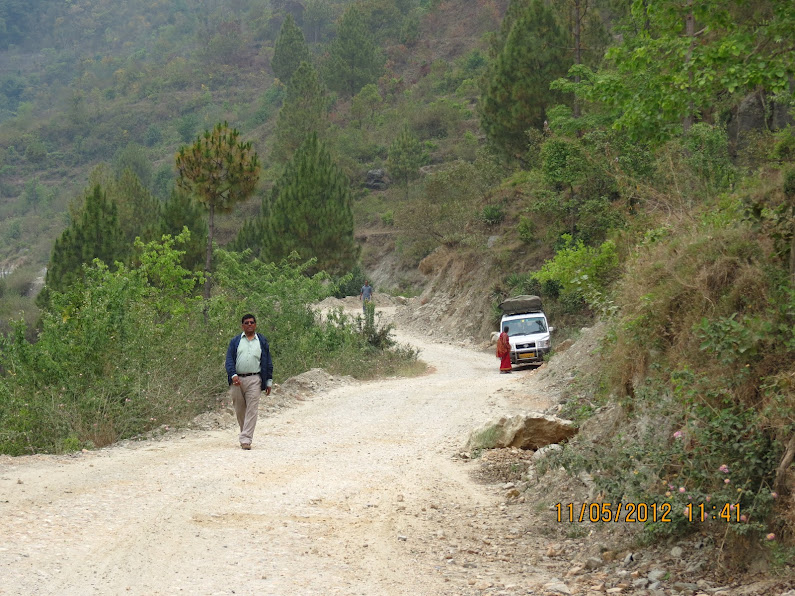
| Near Hydro-power Project |
 |
| Near Tehri Dam |
 |
| A closer View of Tehri Dam |
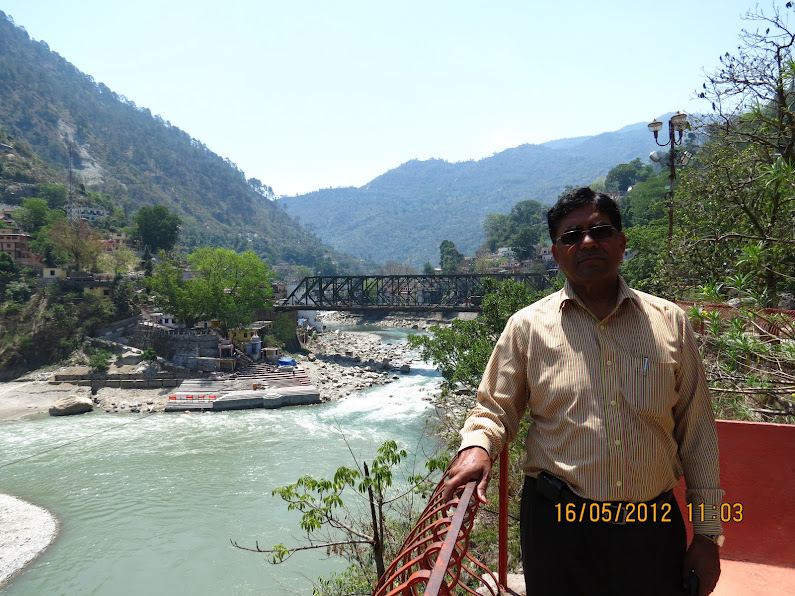 |
| At Karn Prayag |
 |
| View of Karn Prayag |
 |
| Near KedarNath |
 |
| Dry stretch of River Bhagirathi |
 |
| Beautiful location of Yamunotri |
 |
| River Mandakini: Peace of mind |
 |
| Site View of river Alaknanda |
 |
| Receding water table at Tehri Dam |
 |
| Ganga at Rishikesh |
 |
| Ganga at Gangotri |
Monday, May 21, 2012
Special Report on Scientific Ganga Yatra in Uttarakhand
In view of the dedicated efforts
of Hon’ble Prime Minister of India to Save
Mother Ganga and related Social
Movements, Prof. B. D. Tripathi of the Banaras Hindu University, who has
pioneered Ganga Pollution Researches since 1972 and also Expert Member of the
National Ganga River Basin Authority (NGRBA), has made an intensive GANGA YATRA
in Uttarakhand and field based Ecological Study during the month of May 2012.
He has visited river Ganga, Bhagirathi, Alaknanda, Mandakini, Pindar, Dhauli
Ganga, Nandakani, Sone Ganga and river Yamuna in Uttarkhand. Prof. Tripathi has
travelled across the Uttarakhand and spent day and night on the bank of various
rivers for seventeen days. Dr. Tripathi has also visited Gangotri, Yamunotri,
Badrinath, Kedar Nath, Deoprayag, Rudraprayag, Karnprayag,
Nandprayag,Vishnuprayag, Soneprayag,
different Dams and Hydroelectric Projects etc. to study different anthropogenic
activities and its impact on GANGA. The main aim of his study was to identify anthropogenically
induced ecological problems of river GANGA in Uttarakhand, and suggest possible
remedial measures to Hon’ble Prime Minister to overcome the problems of river
GANGA and its important head streams, who are regarded as lifeline and
worshiped as the mother in India. During Scientific Ganga Yatra, besides ecological
investigation, Prof Tripathi has also met to the people who are dependent for
their livelihood on these rivers, religious leaders, social activists, various
scientific groups working on Ganga, noted environmentalists and those who were
serious about the development of the Uttarakhand . He has made following
important observations during his scientific Ganga Yatr
- Large number of hydroelectric power projects have been commissioned and proposed on river Ganga and Alaknanda, such as on river Ganga 16 hydroelectric projects have been commissioned, 13 projects are under construction and 54 projects are proposed. On river Alaknanda 6 hydroelectric projects have been commissioned, 8 projects are under construction and 24 projects are proposed.
- Hydroelectric power projects are causing submersion of large land area which results in loss of flora and fauna. These hydro-power projects are altering natural rhythm of nature, sediment and nutrient regimes, temperature, chemical qualities of water, fresh water biodiversity and reproductive capabilities of aquatic animals. This also creates high hydraulic pressure at a given point of earth which may stimulate earth quake and landslides
- Construction of dams causes huge destruction of mountain ecosystem including reduction in the natural flow and dilution capacity of the river resulting enhancement of the pollution level
- The Tehari Dam has been constructed among the hills made up by the soil. This result in loss of 25-30% water of the reservoir through seepage and induce severe threat to the hills in the vicinity.
- In Uttarakhand, natural flow of majority of rivers has been obstructed by a series of hydroelectric power projects. At many places main path of these rivers have been diverted through the tunnels and upto several km main path of the river has been dried. This has not only destroyed the flora and fauna of the river stretch but badly affected the quality of water, human life and altered the structure and functions of the natural ecosystem.
- The diversion of rivers has also created various socio-economic and religious problems to the local inhabitants. Their local resource based livelihood (such as agriculture, domestication of animals and religious activities) suffers significantly enhancing unemployment and poverty.
- The blasting activities in these hilly areas are causing huge cracks in the hills, loss of biodiversity, seepage of water and increased soil erosion responsible for siltation in the rivers.
- The observed high wind speed in the Uttarakhand due to low pressure belt creates suitable environment for the production of electricity through wind mills. The use of Wind mills may mitigate the negative impacts of the anthropogenic activities in these areas.
- Promotion of Wind mills for generation of electricity in Uttarakhand in place of hydropower projects which require huge land area and water, shall help in maintenance of the ecological flow of the river Ganga which is currently a burning issue in India and main objective of the NGRBA.
Wednesday, June 8, 2011
SUGGESTIONS FOR THE PREPARATION OF RIVER GANGA BASIN MANAGEMENT PLAN
River Ganga is the basis of life and principle source of economic, sociological, cultural and environmental development of its highly productive and densely populated basin, hence, River Ganga Basin Management Plan (RGBM) should include the following:
1. HOLISTIC ECOLOGICAL APPROACH
· Human life on earth is governed by Nature; hence, objectives of the River Ganga Basin Management Plan shall only be achieved through holistic ecological approach based on self regulatory mechanism and regeneration abilities to maintain the homeostasis.
· Numerous micro- and macro organisms, associated directly or indirectly with Ganga River, manage the river ecosystem through decomposition of the materials/pollutants and bio-geo-chemical cycles.
· Green belt of resilient and ecologically adaptable plant species on both banks of river will solve the non point pollution problem of the Ganga River. Green belt will act as kidney in filtering the pollutants and also check the soil erosion.
2. WASTEWATER TREATMENT TECHNOLOGIES
· Point pollution sources like city sewage and toxic industrial effluents should be treated in specific treatment plants before release into river. Suitability and economic viability of the new Sewage Treatment Plants be ensured before their establishment.
· For economic saving old and existing STPs be upgraded/modified in light of their past drawbacks and recent advances in Wastewater Treatment Technologies.
· Land use patterns, fertility level of land and upstream/downstream locations for new STPs be examined so that no STP be constructed on highly fertile lands.
· Probabilities of Community Treatment Plants and recycling of the wastewater be explored for economically feasible solutions.
· Accurate quantity and quality of waste water (e.g. sewage, industrial effluents and laboratory chemicals etc.) generated at Varanasi, Allahabad and Kanpur be assessed for long term environmental planning.
· Small scale & cottage industries (including motor workshops & garbage disposal) located in vicinity of the cities be identified and suitable treatment plants be suggested.
· Higher dilution zones of the river Ganga be examined and preferred as disposal sites.
3. EVALUATION OF GAP – I AND GAP – II SHORT COMINGS
· Following short comings of GAP – I and GAP – II be examined carefully:
o Accumulation of persistent toxic chemicals in crop plants (cereals, vegetables and fruits) due to irrigation with treated water released from existing STPs.
o Mostly STPs were constructed on highly fertile croplands ignoring the basic principles of eco- resource management.
o STPs were not designed for long term sustainability.
o Lack of individual responsibility for failure of various projects
o Ignorance of temporal and spatial variability during data generation
o Lack of local technical expert monitoring committees at grass root level.
4. SOLID WASTE MANAGEMENT
· Proper quantification and quality examination of solid wastes generated in each zone of the city be assessed for their recycling and other utilizations.
· Electric crematorium on respective cremation grounds, incineration plants for cattle’s and separate washing ghats at downstream be established.
5. LAND USE POLICY FOR RIVER BANK
Unauthorized constructions near the banks and its catchment areas be stopped immediately to maintain the natural flow.
6. MONITORING AND EVALUATION OF DIFFERENT PROJECTS
Local Technical Expert Committees with one or more expert member(s) of the NGRBA/SGRCA be formed to monitor and assess the working of ongoing projects.
7. RAIN WATER HARVESTING, GROUND WATER RECHARGING AND IRRIGATIONAL PRACTICES
· Rain Water Harvesting, its storage, multiple uses at micro community level and Ground Water Recharging practices be encouraged to maintain the ground water status and save the Ganga water.
· Development and adoption of micro level irrigational techniques be adopted to save the huge loss of Ganga water through flood irrigation practices.
8. GANGA WATER USERS POLICY
· Maintenance of optimum ecological flow in the river Ganga and its tributaries.
· Non consumptive activities (e.g. fishery, aquaculture, navigation etc.) of Ganga water be encouraged.
· Mechanism for restoration of Ganga ecosystem.
· Policy for the check and balance of natural resources.
· Policy for involvement of Ganga users in various projects.
· Mass awareness programs through documentaries, Nukkad natak, literature and public lectures be organized at school level.
· In the second meeting of NGRBA held on 1st November 2010 under chairmanship of the Hon’ble Prime Minister it was resolved that “A dedicated institution for Ganga related R&D activities should be setup at Varanasi as part of NGRBA”. The Hon’ble Prime Minister has also expressed his views that the matter would be considered by the standing committee. Therefore, it is necessary to include the establishment of a dedicated institute at Varanasi as a part of NGRBA in the River Ganga Basin Management Plan (RGBM).
Subscribe to:
Posts (Atom)